

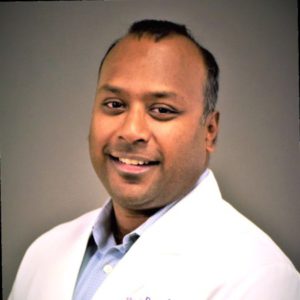
Dr. Vinod Dasa discusses the new role of physical therapy in total joint replacement.
Filed under
Transcript
1,133 words · 6 min
Transcript
1,133 words · 6 min
So, Total joint replacement, uh, traditionally, when I was a resident, patients would stay in the hospital for some time and then we were sending them to Inpatient rehab. And as things have improved, our patients have slowly evolved and now we're doing Outpatient therapy for the most part. But we know that there's a significant amount of cost related to that. How do we relook at the post-acute space and how we traditionally see Physical therapy?
So this is what we did when I was a resident, when I was in training. We had general anesthesia and then the PCA, right? And then our patients would push that PCA button like it was candy, and then we slowly evolved. We began to innovate. Then we introduced the spinal, and our patients were still pushing the PCA pump. Then we had Multimodal analgesia. We're doing the spinal, and then all of a sudden now we started thinking about regional anesthesia and our femoral nerve blocks and what happened with femoral nerve blocks. Patients were falling. You heard earlier by Dr. Sinha.
Uh, about shutting down the quads and we're putting them in Knee immobilizers post-op. Then we started, uh, moving a little more distally, and then we started blocking the adductor canal, right? And then we learned, and now we have periarticular injections. And then now we're doing stuff even more upstream preoperatively, uh, even before multimodal day of, and doing, uh, Cryoanalgesia and some Other, uh, targeted therapies around the Knee. And you can see this is the data from Oschner, uh, which is the health system down here in Southern Louisiana.
where in 2012 our length of stay as a system was a little north of 3.5 days, and then you can see how our length of stay has precipitously declined. But if you look at the Innovation in this space, it's really been around kind of the perioperative time frame. The moment the patient comes into the hospital and the moment they hit the parking lot, we've pretty much done a very good job in that space. But what about that post-acute space? Is there time and room now to innovate in that post-acute, post-discharge timeframe?
And so as we've evolved, you're starting to see the Research starting to lay the foundation about re-looking at Physical therapy and re-looking how our patients spend and heal within that post-acute time frame. So, this was an early study done in 2008, looking at home-based Physical therapy versus traditional.
Outpatient physical therapy. Uh, you can see range of motion at 12 weeks was really no different compared to the home-based protocol compared to the Outpatient therapy protocol. And again, looking at outcome scores, Pain and function scores that we're starting to get used to, uh, no difference in that.
Uh, you can see here in this, uh, home-based virtual therapy program, uh, total cost was up to $1200. Uh, but in the traditional Outpatient physical therapy program, up to $4500. Again, uh, you can see in terms of kind of more practical things in terms of falls, uh, Pain and function at 12 weeks, uh, no different, no difference.
between the homeroup versus the uh Outpatient therapy group. So, that's a traditional Total Knee Replacement. What about unis? Again, another study looking at home-based therapy versus traditional Outpatient therapy. You can see no change in range of motion in the home-based program versus the Outpatient program.
And then, uh, I think probably most people appreciate that the recovery of total hips is very different than the recovery of total Knee replacements. You know, especially with the DA Approach, uh, the recovery is a lot smoother than in the past. Again, uh, Research and science showing using Pain and function scores, uh, no difference in the home-based therapy versus the traditional Outpatient therapy group.
We looked at the standard of recovery protocol, uh, back when I was doing that, uh, back in 2012 to this enhanced Rapid Recovery protocol that a lot of us have adopted, uh, since 2013. And we looked at our Pain and our functional outcomes, uh, enabling this transition to, uh, home-based uh Physical therapy. And so, we looked at our patients, uh, again, in the standard protocol where we're doing femoral nerve blocks, very little patient education and patient engagement. You know, I was probably just as guilty as most surgeons where, you know, you book the Surgery.
You see them the day of, and then you do the Surgery, you send them to the parking lot, they go home and you wish them good luck. I'll see you in 6 weeks and, you know, we'll kind of see how things go to this kind of really Enhanced Recovery protocol where we really start thinking about the patient from the day we book them, optimize them, teach them, educate them, engage the family members, give them the tools and resources for success. Don't just kick them to the curve and then bill your professional fee. So how do we really get our hands around each one of our patients.
and look at them holistically. And when we do that, and we looked at these Enhanced Recovery Protocols that really look at the patient holistically, we see not just an improvement in Pain and function, uh, satisfaction scores, you know, the, the, the touchy-feely stuff, but functionally, you see a big improvement in how our patients do. And so, if we look at purely specifically length of stay and range of motion as we deploy these Enhanced Recovery programs, you can see a tremendous improvement in our functional scores that our patients.
Undergo. And so what we found is with these Enhanced Recovery programs, Rapid Recovery Protocols, a tremendous improvement in the range of motion in our total Knee replacements out to 12 weeks, and then it really plateaus and they equal out after that. And then the risk of flexion contracture and your ability to achieve greater than 120 degrees of flexion much more improved in these Enhanced Recovery, Rapid Recovery Protocols as we start deploying these innovations and start using these enhanced surgical techniques and really communicate and work with our patients.
Patients and our care team start to see the fruits of our labor, and we're starting to see our patients achieve outcomes that quite frankly, when I was a resident, I didn't think was possible. I think probably 1015 years ago, if you said you would be doing Outpatient Knee Replacement, most everybody would look at you like you had three eyeballs. And if you said we would be doing it opiate-free or opiate sparing, I think people would laugh you out of the room. And then fast forward now to 2020, and we're achieving things in the last 10 years that, you know, I don't think any of us could have predicted back when I was in training.
Automatically transcribed and not checked by a person — it may contain errors, particularly in names, drugs and dosages. The recording is the source.
Check yourself
5 questions5 questions on what was actually said in this recording, and we remember how you did. Sign in to take it — an account is free, and nothing else on doc.social asks for one.
AI-generated from this recording’s transcript, not written by the speaker. Tell us if a question misreads what was said.
Related lectures
 Lecture
Outpatient Joint Replacement in 2020
Honest assessment of why and how to safely utilize outpatient joint replacement focusing on the US experience.
 Lecture
(2020) Robotics in THA: Why? How?
Current status of the use of robotics in Total Hip Replacement looking at the US experience.
 Lecture
Cryoanalgesia as Part of Multimodal Solution to Manage TKA Pain
Opioid free outpatient TKA is a possibility by using team work and deploying innovations to drive success.